The Unfinished Dream

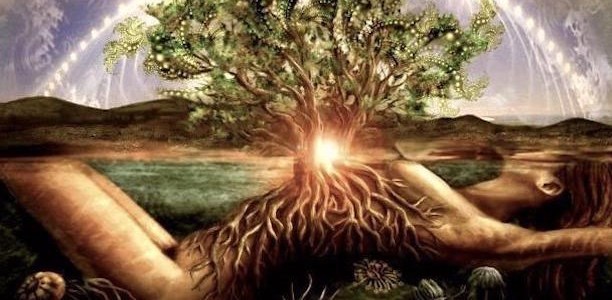
The Unfinished Dream is an experimental writing collection, an artist book, a short film and a performance. It began as an experiment in applying Ernst Bloch’s utopian theory to creative writing practice, inspired by the text works of Theresa Hak Kyung Cha.

Writing Utopia Now

Largely unacknowledged by both the worlds of mainstream media and academia (the media is addicted to perpetuating the crisis of fear, while academia is addicted to the logic of impossibility) a spiritual [r]evolution in awakening consciousness is happening all over the world - perhaps on an unprecedented scale. Mainstream media tends to operate at a … Continue reading Writing Utopia Now

Border : Crossing

[Notes from a Drawn to the Page workshop at The Towner Gallery, Eastbourne, on my first encounter with Sweatopia (The Cry of the Gland II) by Jitish Kallat, 2010] dense matting of human piled up motor vehicles abstracted body parts scattered words on a barbed wire fence the sweat of my bones breaking out                                                       of my … Continue reading Border : Crossing

Androgynous Economies of Narrative Form and Structure

Ursula Le Guin’s 1969 novel, The Left Hand of Darkness, experiments with form and structure in ways that directly reflect the ideas embodied within the novel’s content. In form, structure and content, The Left Hand of Darkness experiments with the harmonious union of opposites, including perceived gender differences and the relationships between fact and fiction, truth and myth, reality and story.

Photographing a Ghost

How many frames in a five-second film? Forty-five in 1894: that’s nine frames per second. Each moment captured one-ninth of a second’s presence and the sneeze from beginning to end lasted five seconds. In the film, I see the sneeze sneezing before my very eyes. A phantasmagoria – this ghost from the past: a man long dead who lives on in his eternal sneeze.

Ouroboros: Utopias of Style, Form and Structure in Literary Fiction

Figured through the metaphor of Ernst Bloch’s Gothic lines, Woolf’s explorations of the utopian possibilities of language, consciousness, community, society, space and time resonate with the powerful undercurrent of negative dialectics and the possibility of becoming. Bloch, in his essay on the utopian function of architectural structures, provides a compelling and energetic metaphor for the study of the utopian dynamics at play within the literary text. Through the metaphors of stone and line it is possible to explore the ways in which utopian desire inhabits and drives a text structurally and stylistically.

Searching for Utopia

Futures tells the story of Eye, who resolves to construct her own future after her past is taken from her by trauma. Eye’s resulting shock effectively creates a rift between her own past and her future – a rift she inhabits like a nomad, wandering through a world whose pieces no longer seem to fit together. In this void, Eye discovers the freedom to choose her own path, as she gains the strength of presence to decide whether and how she wants those pieces to fit together for her.

Elynge Ellett

She’s nothin’ like they say she is, you know. Green-haired, frog-faced, sucker-fingered creature, with the tail of a six-foot eel. I mean, most people don’t even realise she’s a woman. But I’ve seen ‘er, so I know.

Beith: Beginnings

As promised, here's some of my favourite previously unpublished experimental writing.  It's from a collection called The Unfinished Dream, which I submitted for my MA final dissertation.  The collection is structured around the seasonal cycles and the ogham alphabet, so I'll be posting regular extracts throughout the year at the appropriate times.  And if you're interested, … Continue reading Beith: Beginnings